Couples Therapy in Philadelphia
When the same fight keeps finding you - no matter how many times you've promised it won't - something deeper than communication is at work. That's where we begin.
In-person couples therapy in Philadelphia and online for residents of Pennsylvania, New Jersey, and Delaware
It's not that you're always fighting. It's that you're both bracing - for the comment that lands wrong, the moment one of you shuts down, the familiar feeling of ending up further apart than when you started.
You've been here enough times that you can feel it coming before it happens. It shows up in ordinary moments — before dinner, on the drive home after a good night out, when you sit down to figure something out together. One minute you're fine. The next you're not, and you both know exactly where this is going.
Maybe one of you mostly wants the arguments to stop. Maybe the other is quietly terrified about what it means if things don't change. Either way, you're both exhausted by the cycle — and if you're honest, a little embarrassed by who you become in the middle of it.
There's no question you love each other and want this to work. The question is why it keeps being this hard — and whether something can actually change. It can. But not with better communication scripts. Something deeper has to shift first.
You each have a role in the cycle — and neither of you chose it
Most couples come to therapy describing a version of the same dynamic. One person reaches — pushes to reconnect, keeps bringing things up, can't let it go until something is resolved. The other pulls back — goes quiet, shuts down, waits for the storm to pass. Both are exhausted. Both feel misunderstood. And from where each of you is standing, it genuinely looks like the other person is the problem.
They're not. But it takes slowing things way down to see that.
You each have a role in the cycle — and neither of you chose it
Most couples come to therapy describing a version of the same dynamic. One person reaches — pushes to reconnect, keeps bringing things up, can't let it go until something is resolved. The other pulls back — goes quiet, shuts down, waits for the storm to pass. Both are exhausted. Both feel misunderstood. And from where each of you is standing, it genuinely looks like the other person is the problem.
But they're not. But it takes slowing things way down to see that.
If you tend to pursue
You're not trying to be difficult. You're scared.
You're tired of always being the one to bring things up. You know these issues affect both of you - but somehow it always falls to you to name it, to push for the conversation nobody else seems to want to have.
The moment your partner pulls away, something in you panics. If you can't reach them right now, the moment will pass, the thing will get buried, nothing will change. You can feel the urgency rising - saying more than you meant to, pushing a little harder than you wanted to. You're not trying to fight. You just need them to feel the weight of this the way you do.
When they tell you to calm down, or that things are fine, you don't feel reassured. You feel dismissed and defeated. Because if they can't see how important this is — what does that mean for the two of you?
Somewhere underneath the urgency is a sinking feeling that you might be losing each other, and you're the only one worried about it. It feels like you have to be the one to fight for this, but you’re exhausted and regretful of what it brings out in you.
You're not trying to be difficult. You're hurt and angry that you have to fight this hard just to feel like you matter to the person you love most.
If you tend to withdraw
You're not checked out. You're overwhelmed.
When you sense tension with your partner, you do what you always do — try to solve the problem quickly and get ahead of it before things escalate. You've seen what conflict does to people, where it leads, and everything in you wants to avoid things getting out of control.
But staying “calm” only seems to make things worse. Your partner wants you to say something, show something — and you freeze. Your brain short-circuits. You brace, shut down, and pull away while you wait for it to be over.
Your partner thinks you're checked out or that you don’t care. That’s not true - but you’re overwhelmed and you just want to get away from all of the pressure.
You feel frustrated with yourself that you can’t get it right, but also angry with your partner for demanding something you don’t know how to give.
But anger won't help, and you don’t want to make things worse. You’re not shutting down because you don't feel anything - you feel too much and have nowhere to put it. At this point you feel incompetent in a way you rarely do anywhere else — failing the person you love most, in the one place where you most want to get it right.
Why communication advice alone doesn't fix it
Most couples arrive having already tried to talk their way through it — the books, the exercises, the I-statements, maybe even a previous round of marriage counseling. And for a while, things improve. Then the same dynamic reasserts itself, usually in the middle of a conversation that mattered.
The reason those tools often don't stick isn't that you're not trying hard enough. It's that the responses showing up in conflict — going silent, escalating, going blank, bracing for impact — were learned long before this relationship. They developed in earlier experiences where they made complete sense. And they don't switch off just because things are different now.
You can want to stay open and still find yourself closed. You can know exactly what you're supposed to say and still not be able to say it when you're flooded or shut down. That's not a failure of effort. It's what happens when old patterns run faster than intention.
This is where most couples therapy falls short — it teaches skills without addressing what's driving the behavior underneath. When you work at the level of the nervous system, not just the words, something different becomes possible.
How I work with couples
I blend attachment-focused and body-based approaches — drawing on Emotion Focused Therapy (the gold standard in couples therapy), somatic therapy, and IFS — to help us address what's underneath the fight, the disconnection, and the cycle you're both tired of. The goal isn't just better communication. It's a new way of being with each other.
Our time together is too valuable for you to come in and replay the same argument you already had at home. In our sessions, we slow down the moment-to-moment experience between you — what gets activated in your body when your partner does that thing, what part of you takes over when you feel unheard, what you're actually longing for beneath the frustration. The fight about who was supposed to take the trash out is never really about the trash - we go deeper to what’s really happening so you don’t keep getting stuck in the same places.
What our work will look like:
Direct and active
I'm not a neutral observer. When I see the cycle starting to pull you in, I'll name it, interrupt it, and help us get curious about what's happening in real time — not to place blame, but because you can't shift something you're in the middle of without someone slowing it down.
Trauma-informed and attachment-based
When one or both partners carry a trauma history, behaviors that seem to "not make sense" often make perfect sense through a nervous system lens. Shutdown, reactivity, over-functioning — these are adaptations. We build safety first, because new ways of connecting can only emerge when both of you feel genuinely safe in the room.
No one person is "the problem"
I hold curiosity about how the dynamics between you formed — especially the ones that no longer serve you — and I'll help you both develop that same curiosity. There's no taking sides here. Both of you as individuals need to feel safe doing this work, and both of your experiences matter.
Rupture and repair
There will be conflicts, misattunements, and disappointments in any relationship - that part doesn't go away, and it doesn’t need to. What changes is your capacity to move through them and come back to each other. For many people, genuine repair wasn't modeled growing up. Learning that things can go wrong, that one of you can mess up but you’re still okay and that your relationship is still solid - that is what builds safety.


Common questions about Couples Therapy and Marriage Counseling
-
If you've tried the communication strategies — the active listening, the I-statements, the books — and you keep ending up in the same place, that's usually a sign the issue is deeper than technique. Most couples I work with aren't struggling because they don't know how to communicate. They're struggling because something happens in their bodies during conflict that makes it hard to access what they actually know. That's what we work on directly.
-
It depends on what you're bringing in and how long the patterns have been running. Most couples I work with come weekly and start noticing shifts within the first few months — in how quickly they recover after conflict, in their ability to catch the pattern before it fully takes over. Deeper change, the kind that holds through genuinely hard seasons, takes longer. Most couples work with me for six months to a year or more.
-
It's more common than you'd think for one partner to be more reluctant. Ambivalence doesn't have to be a barrier to starting — sometimes the first few sessions help both partners get clear on what they actually want. I'd rather you come in uncertain than not come in at all. That said, both partners do need to be willing to show up and engage once we're in the room together.
-
Yes — I see couples via online therapy for residents of Pennsylvania, New Jersey, and Delaware. If you're looking for in-person couples therapy in Philadelphia, I have offices in Fishtown (440 East Girard Ave) and Society Hill (822 Pine Street).
-
My fee for a 50 minute couples therapy session is $250. Some clients prefer 75 minute sessions which are $325.
What actually shifts over time
Couples who do this work don't suddenly stop having hard moments. You’re doing life together - the ups and downs are part of that. What changes is what those moments cost — and how quickly you find your way back to each other.
You can have the real conversation — about money, sex, what you actually need — without it derailing into the same fight
Repair happens in hours instead of days. The argument happens, it's hard, and you find your way back to each other
You stop managing each other and start actually talking to each other
The quiet distance that's been building — slowly, for longer than either of you wants to admit — starts to close
One of you having a hard time doesn't have to mean both of you are lost
You start to trust that conflict won't cost you days of recovery — and that hard seasons can bring you closer instead of further apart
Who this works for — and who it doesn't
I work with a small number of couples at a time so this work can be substantive rather than surface-level.
Good fit
You keep having the same argument with different content
One of you shuts down and the other escalates — or you both go quiet
You've tried marriage counseling or communication strategies before and the changes didn't hold when things got hard
Past experiences — yours, your partner's, or both — are showing up in ways you can't fully explain
Something feels off but you can't quite name what it is
You're both willing to look at your own role — not just each other's
Not the right fit
There is active physical, emotional, or verbal abuse between you
Substance use is the primary issue and isn't being addressed elsewhere
One or both of you believes your partner is the problem and isn't open to examining your own patterns
You’re not able to commit to regular appointments
You love one another. Yet, there’s a painful pattern you keep falling into that you can’t seem to get out of on your own.
One of you reaches, pushes, or pulls to connect when worried
You're tired of always being the one to bring things up. You know these issues affect both of you - but somehow it always falls to you to name it, to push for the conversation nobody else seems to want to have.
The moment your partner pulls away, something in you panics. If you can't reach them right now, the moment will pass, the thing will get buried, nothing will change. You can feel the urgency rising - saying more than you meant to, pushing a little harder than you wanted to. You're not trying to fight. You just need them to feel the weight of this the way you do.
When they tell you to calm down, or that things are fine, you don't feel reassured. You feel dismissed and defeated. Because if they can't see how important this is — what does that mean for the two of you?
Somewhere underneath the urgency is a sinking feeling that you might be losing each other, and you're the only one worried about it. It feels like you have to be the one to fight for this, but you’re exhausted and regretful of what it brings out in you.
You're not trying to be difficult. You're hurt and angry that you have to fight this hard just to feel like you matter to the person you love most.
While the other freezes, shuts down, and needs space when overwhelmed
When you sense tension with your partner, you do what you always do — try to solve the problem quickly and get ahead of it before things escalate. You've seen what conflict does to people, where it leads, and everything in you wants to avoid things getting out of control.
But staying “calm” only seems to make things worse. Your partner wants you to say something, show something — and you freeze. Your brain short-circuits. You brace, shut down, and pull away while you wait for it to be over.
Your partner thinks you're checked out or that you don’t care. That’s not true - but you’re overwhelmed and you just want to get away from all of the pressure.
You feel frustrated with yourself that you can’t get it right, but also angry with your partner for demanding something you don’t know how to give.
But anger won't help, and you don’t want to make things worse. You’re not shutting down because you don't feel anything - you feel too much and have nowhere to put it. At this point you feel incompetent in a way you rarely do anywhere else — failing the person you love most, in the one place where you most want to get it right.
Couples therapy offers the chance to learn what may not have been modeled: how to stay connected through conflict, take up space and ask for what you need, own your mistakes with vulnerability, and turn toward the person you love, even when your first impulse is to shut down or pull away.

In our work together, you and your partner can begin to:
Understand & interrupt the patterns you keep getting pulled into
Communicate so that you both feel heard, understood and respected
Navigate conflict and disappointment while staying connected
Deepen intimacy and closeness with one another
Show up more fully as yourselves in the relationship
Build resilience to ride through the waves of life together
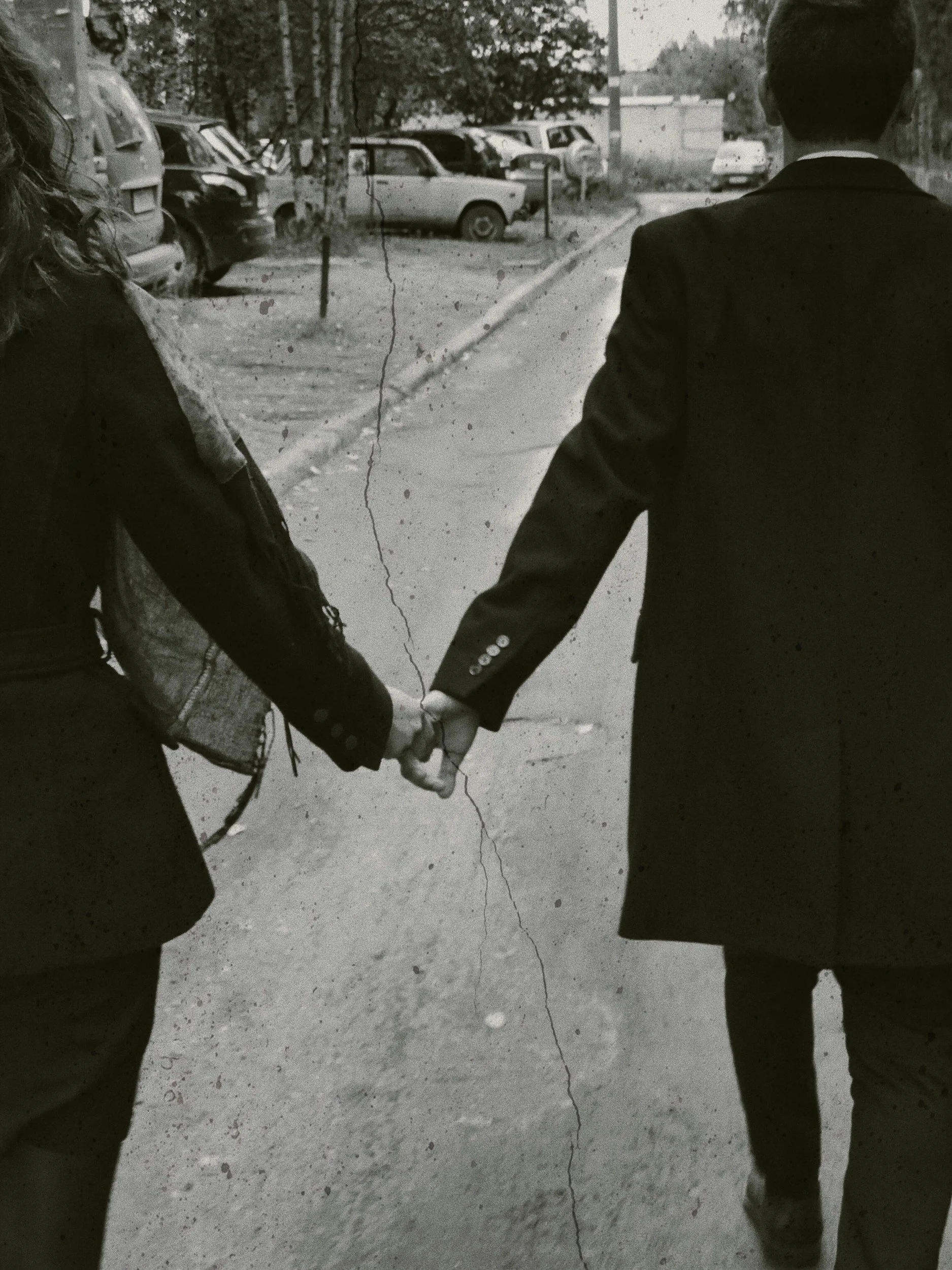
Your relationship with your partner can be one of the most intimate, meaningful, and safe connections in your life.
Reaching out for support shows both courage and commitment to nurturing that connection and creating the relationship you both want.
Looking for in-person couples therapy?